The Airfield
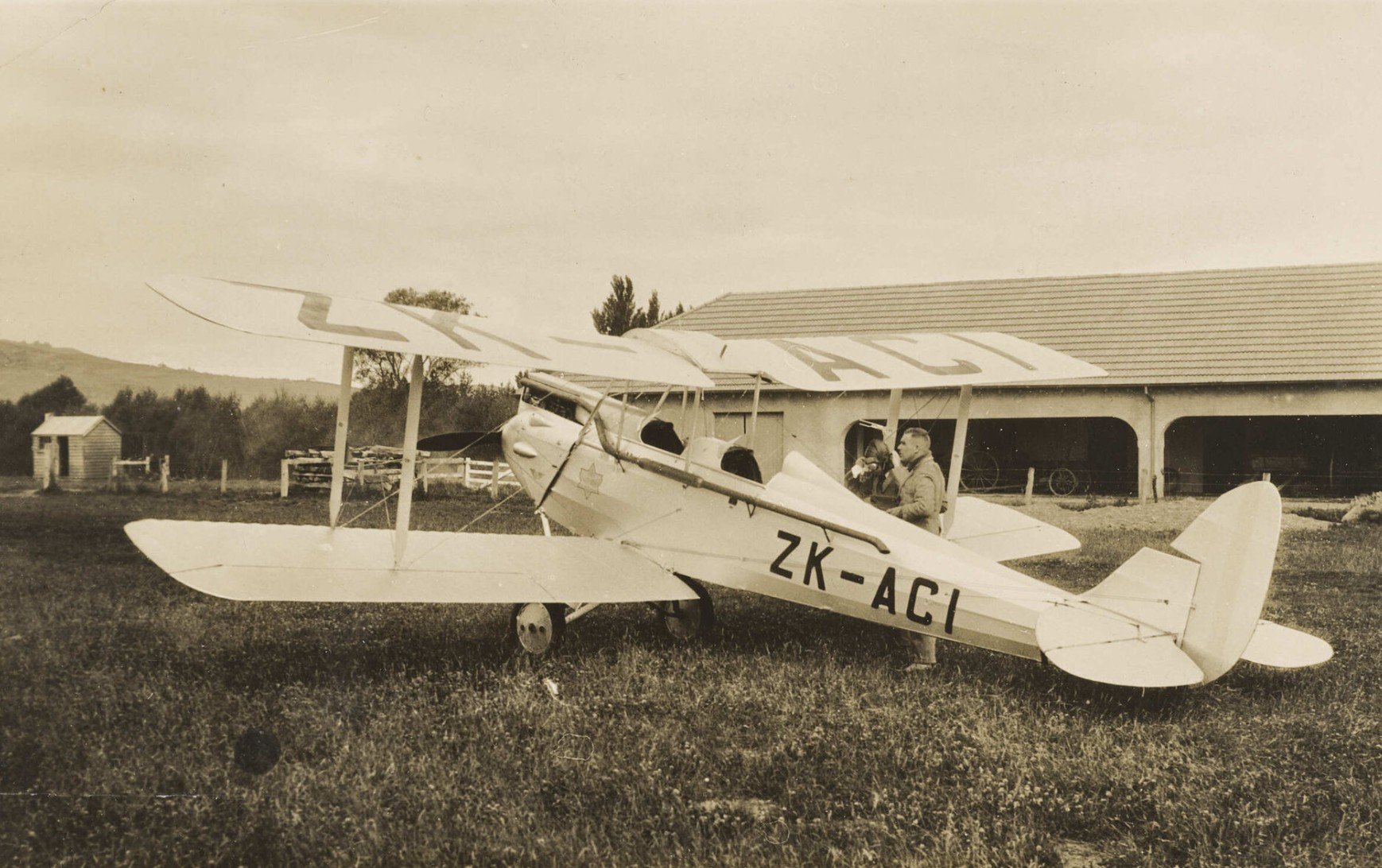
Long before it was a runway, Taieri was an idea: that Otago needed land set aside for aviation, not temporarily or conditionally, but for the long term. In the late 1920s, that idea was far from settled. Dunedin had no aerodrome; aircraft arrived by arrangement rather than expectation and flying relied on borrowed paddocks and goodwill. The Taieri Plain offered something different - space, flat ground, and the chance to build something that would last.
Taieri Aerodrome did not emerge fully formed, nor did it exist separately from the people who created it. The Otago Aero Club and the aerodrome grew together, each shaping the other. Decisions made for club flying determined the field’s early layout and facilities; developments at the aerodrome, in turn, defined what flying in Otago could become. Even during the war years, when control shifted and Taieri became a military station, that continuity was never entirely broken - the field’s foundations and working culture remained rooted in its civil origins.
The aerodrome itself was searched for, argued over, purchased, drained, and steadily improved. Its early story is one of practical judgement: where aircraft could land safely, how the ground behaved in winter, what facilities were essential, and how to plan for growth without knowing exactly what lay ahead. What began as a solution to a problem became a permanent piece of regional infrastructure.
This section follows the life of the aerodrome as a working place. From the search for a home, through construction and consolidation, wartime intensity, and post-war change, it traces how Taieri adapted to new demands while staying anchored to its original purpose. Aircraft, organisations, and people pass through the story—but the connection between the Otago Aero Club and the ground beneath it endures, inseparable and central to the history of aviation in Otago.
-
![]()
Looking for a Home
Taieri didn’t begin as a neat rectangle on a map with a windsock and a gate. It began as an argument: that Dunedin and Otago deserved a real aerodrome, and that waiting politely for Wellington to notice was not a plan.
-
![]()
Building a Future
Taieri was brought into being through a sequence of practical and deliberate decisions - buy the land, make it usable, then improve it continuously until it could no longer be dismissed as temporary.
-
![ALB902765a001, Air Force Museum of New Zealand]()
Preparing for War
When war came in September 1939, Taieri did not need to be invented or imagined into service. It was already there as a functioning aerodrome, with hangars and workshops.
-
![]()
"A Busy but Attractive Life"
“That their course of training at the Royal New Zealand Air Force Station at North Taieri is hard but enjoyable seems to be the general opinion of the young airman pilots who are to-day leading a particularly busy life, that is completely different from their tasks in peace time.”
-
![]()
A Farewell to Arms
“The closing down of the R.N.Z.A.F. Station, Taieri, which is now in progress consequent upon the recent announcement by the Minister of Defence (Hon. F. Jones) of the cessation of aircrew recruiting in New Zealand, brings to an end a valuable contribution, lasting almost six years, to the R.N.Z.A.F.'s training programme.”