

Building an Future
Taieri was brought into being through a sequence of practical and deliberate decisions - buy the land, make it usable, then improve it continuously until it could no longer be dismissed as temporary. When the Otago Aero Club secured the North Taieri property in 1930, what it had acquired was potential rather than polish: more than 100 acres of flat, open ground with room to expand, but very little that resembled an aerodrome in finished form. Turning farmland into aviation infrastructure would take time, labour, and money - and the Club understood that credibility depended on steady progress rather than ceremony.
The earliest work focused on essentials. Hangar space had to be created to protect aircraft from weather; workshops and storage were needed to keep machines serviceable; fuel handling, administration, and instruction all required physical presence on the field. These were not optional improvements. At the time, government policy was explicit: without proper housing and maintenance facilities, no aerodrome could be taken seriously. Taieri’s first phase of development was therefore unapologetically functional - the backbone of flying operations rather than their public face.
Following the inaugural Air Pageant of February 1931, Taieri moved into a quieter but more consequential phase. With its role established and flying activity regular, attention shifted to the long-term usability of the field itself. Drainage, levelling, and turf management became ongoing concerns. A grass aerodrome was only as good as its surface, and maintaining reliable landing areas on the Taieri Plain demanded constant work. Large sections of the field were progressively improved and re-turfed through the mid-1930s, reflecting a recognition that Taieri was no longer experimental - it was infrastructure.
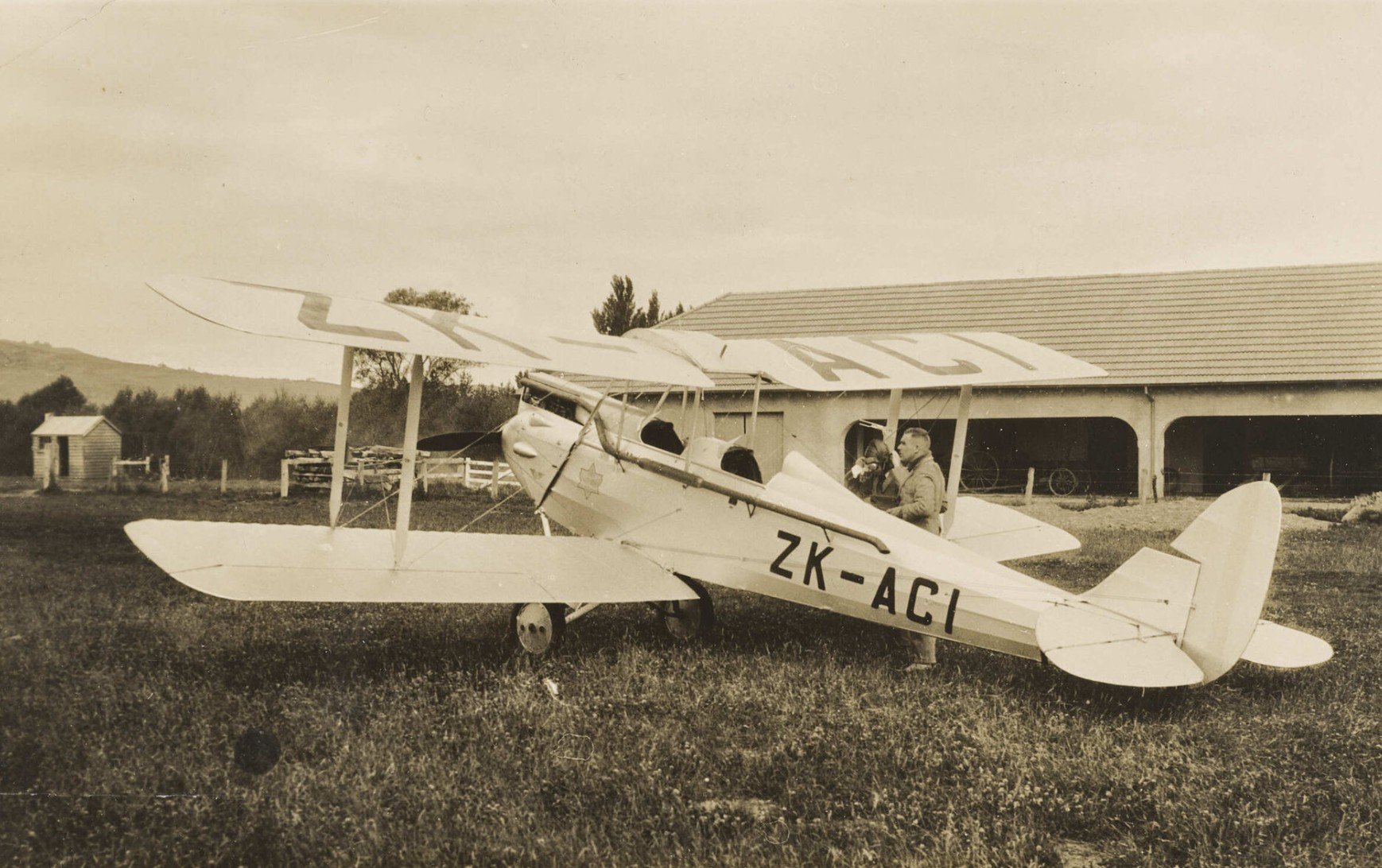
De Havilland DH-60 ZK-ACI operated by the Otago Aero Club Airways with stables converted to hangar space showing in the background.
(Hocken Collections MS-4171/030/003)
By the latter half of the decade, that distinction mattered for reasons beyond civil flying. As international tensions rose and New Zealand’s defence planning evolved, Taieri began to feature in a different kind of conversation. Construction activity expanded again, this time with a military dimension. Timber hangars were erected for Territorial Air Force use, and additional technical buildings were planned or underway. Communications and navigational facilities followed. None of this was considered as dramatic mobilisation, but the intent was clear: Taieri was being prepared to serve purposes wider than club flying if required.
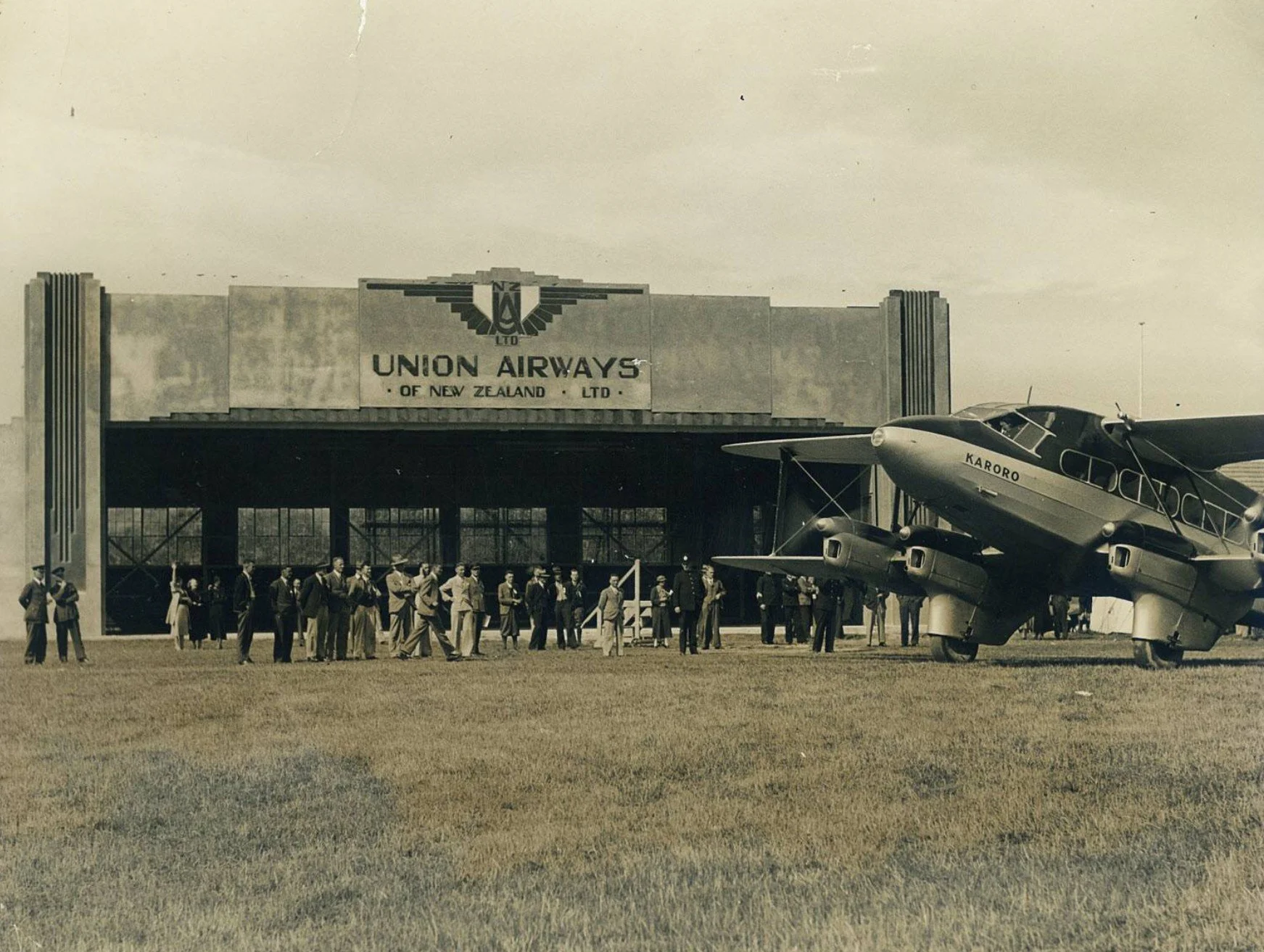
De Havilland DH-86 “Karoro” at the newly completed Union Airways hangar at Taieri Airfield in 1936.
(Earl Varcoe papers, Hocken Archives & Manuscripts 93-149/078)
What’s striking in hindsight is how seamlessly that transition occurred. There was no sharp break between “peaceful” aviation and defence readiness—just a gradual layering of capability onto a field that had already proven its value. Because Taieri had been built methodically, with space to grow and surfaces to support regular use, it could absorb new demands without being reinvented.
By the eve of the Second World War, Taieri Aerodrome stood as something the Otago Aero Club had envisaged years earlier but could not yet name: a permanent regional airport, shaped by civil enthusiasm but robust enough to matter strategically. The work done in the early 1930s - quiet, practical, and largely uncelebrated - meant that when war clouds did gather, Taieri stood ready and prepared.