

First Services
From October 1930, Taieri stopped being “the club’s field” and began to look like Otago’s front door to the future. The hangars, previously the farm stables, had been converted to their new purpose, the runway was taking shape, and Flying Officer E. G. Olson had arrived to begin the real work: training pilots, taking locals aloft, and proving—flight by flight—that Dunedin and the Otago Province could be part of the new air age.
That proof came dramatically on 6 November 1930, when a De Havilland 50 four-seater from the Air Travel Company dropped in from Christchurch with three passengers, a bag of mail, and a stiff headwind story. It was the first commercial aerial service of its kind into the deep south, and the Otago Aero Club treated it like the milestone it was. Olson met the aircraft above Flagstaff and escorted it down to Taieri, where the Club’s president, Harold Barrowclough, welcomed pilot and passengers and made a point that still rings true: Taieri was not just a training ground—it was Dunedin’s airport in the making. The service left again mid-afternoon, but something had changed. The idea of “arriving by air” was no longer a headline from elsewhere. It had happened here.
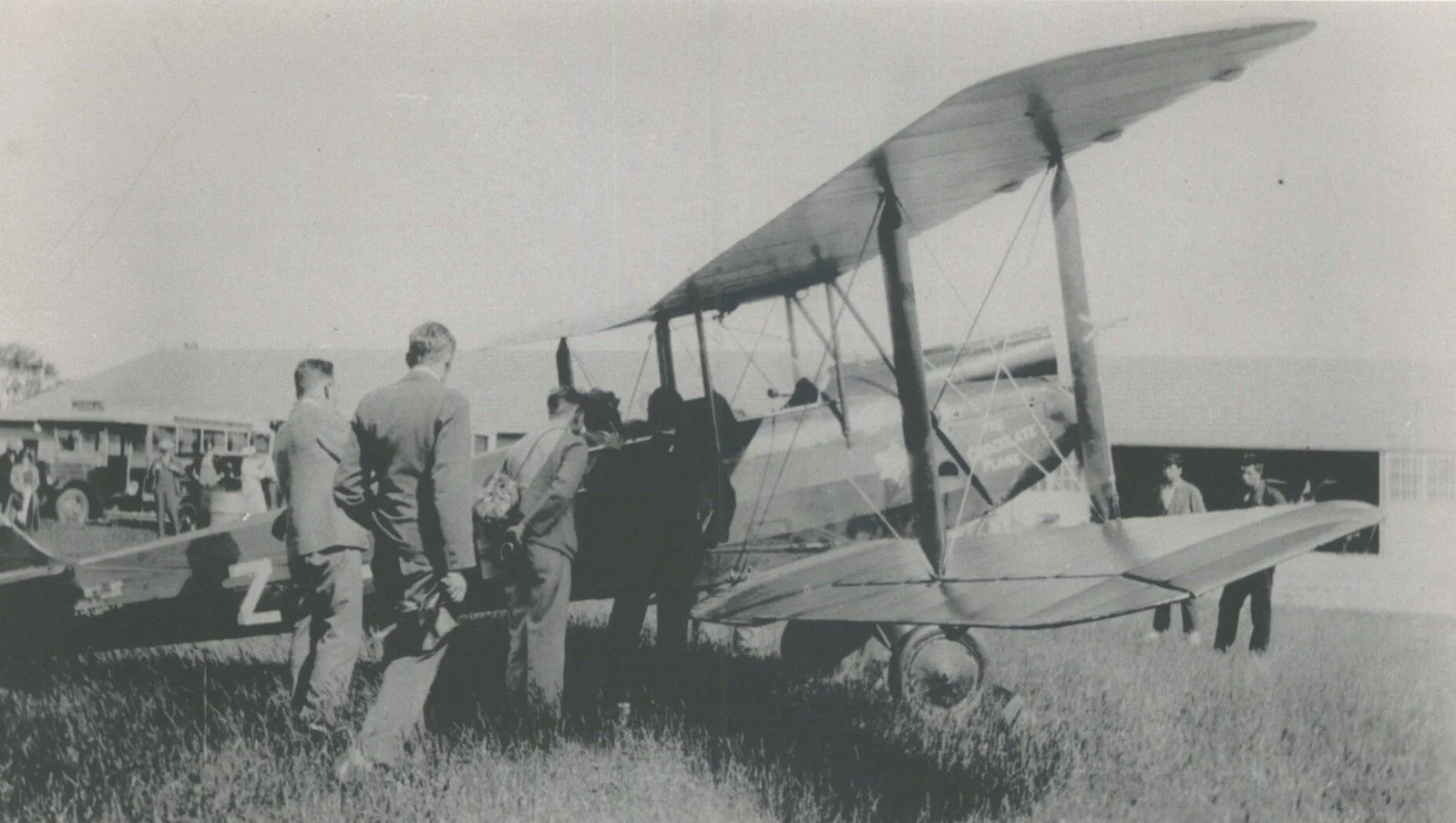
With the aerodrome now part of everyday life, the Club’s story turned human. There were mishaps and near-misses, long days in the wind, and constant improvisation. In December 1930, Oscar Garden - already famous for long-distance flying - borrowed an Otago Gipsy Moth and headed for Invercargill after a problem with his own aircraft delayed him on the ground. Around the same time, the Club’s “Chocolate Plane” arrived - so nicknamed because Cadbury, Fry, Hudson Ltd helped make the purchase possible. Alongside generous donations from locals and supporters, it meant the Club finally had the beginnings of a fleet. Training became easier, and flying became more visible. Taieri wasn’t just a place you drove past; it was somewhere you went to watch the future happen.
By early 1931, the Club had the first student pilots ready to be tested. On 20 February, the Director of Air Services, Wing Commander S. Grant Dalton, examined the Otago Aero Club’s first group of pupils for their “A” licences - and all eight passed. It was a proud moment, and a practical one too: the Government subsidy for club-trained pilots helped keep the whole operation afloat. Almost immediately, the Club began inviting the public into the experience. Passenger flights were offered at set prices (“See Dunedin from the air”), stunting flights for the brave, longer trips by arrangement. The point wasn’t just to fly; it was to build “air sense” across the province.
And the Club did that. Taieri became a hub not only for Dunedin, but for Otago’s wider communities. Oamaru, Balclutha, and Central Otago towns were drawn into the orbit: visits, meetings, lectures, the promise of regular instruction if enough pupils could be found. The Aero Club wasn’t acting like a hobby group. It was behaving like an early aviation service - one that happened to be run by volunteers, supporters, and a few very determined pilots.
All of that momentum set the stage for the moment every aviation town dreams of: the day a legend comes to call. In early 1933, news began filtering south from Sydney that Sir Charles Kingsford Smith was again setting his sights on the Tasman. Nothing about it felt automatic. Dates shifted, weather mattered, and plans were always provisional. But the name of the aircraft - Southern Cross - garnered its own special magnetism. Even people who had never been near an aerodrome knew what it meant: modern aviation at full scale, flown by a man who had already become part of the world aviation legacy.
The Otago Aero Club didn’t just hope to watch from the sidelines. It put its hand up to host. The Club was told the Southern Cross was expected to arrive at Taieri from Invercargill, with a civic reception planned on landing and joy flights scheduled over two days. The arrangements - entertainment, crowd control, timings, the whole choreography - were to be the responsibility of the OAC. That detail matters, because it shows how far the Club had come: only a few years earlier it was arguing for the right to exist; now it was being trusted to stage one of the biggest aviation moments the province could attract.
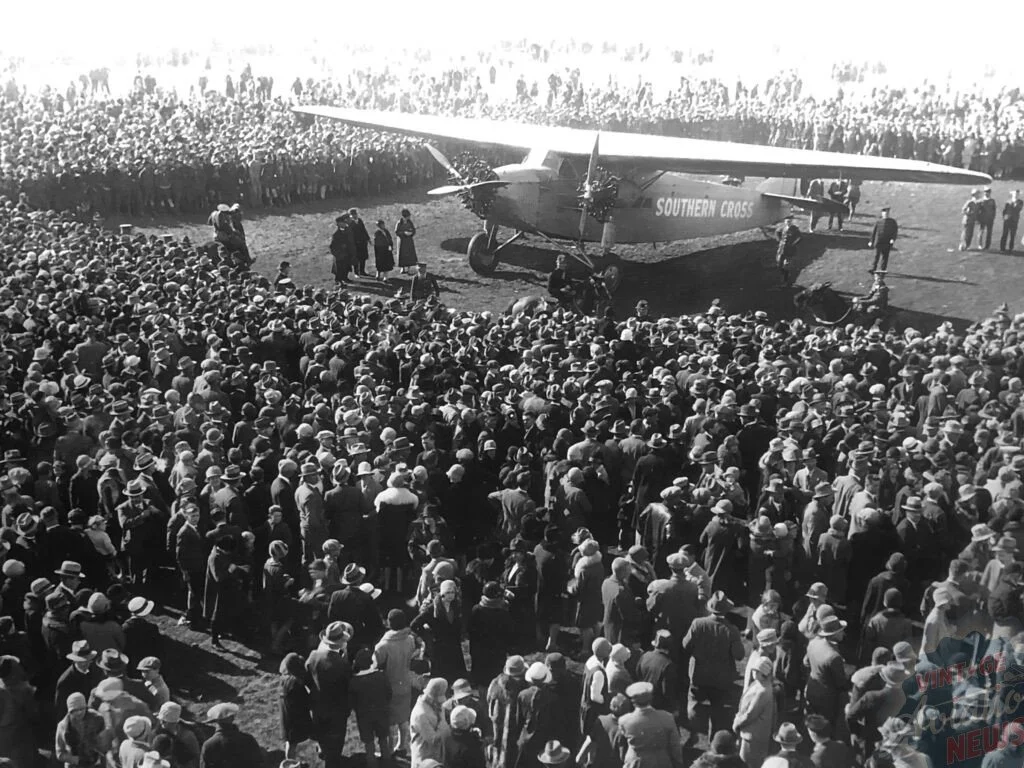
And when the Southern Cross finally made its New Zealand appearances, Otago made sure it was represented where it counted. One Otago aircraft, piloted by Flying Officer Olson, left Taieri before dawn to get north in time to join the official welcome as the Southern Cross was expected to make landfall - carrying a senior Club figure so Otago’s voice was in the room. Later, when the Southern Cross drew huge crowds at Wigram, two Otago Moths flew up from Taieri - one carrying Olson and a civic leader, the other carrying Otago supporters - specifically so the Club could stand among the welcoming party. It wasn’t just sightseeing. It was Otago placing itself in the national aviation network, shoulder to shoulder with those aeroclubs that had started later and been given more initial government assistance.
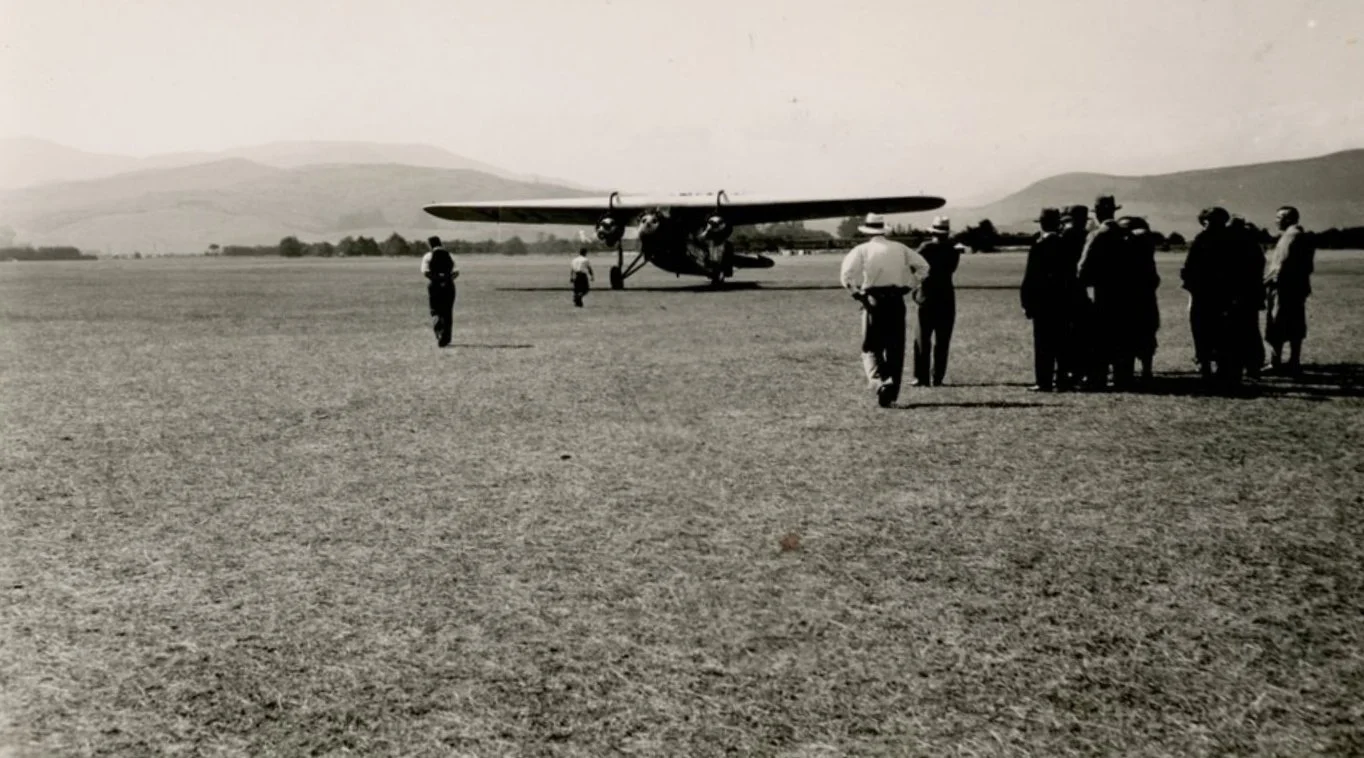
All that preparation and effort paid off. When the Southern Cross landed at Taieri airfield on June 13, 1933 with Sir Charles Kingsford Smith at the controls, 10,000 people assembled at the aerodrome to witness the arrival of the famous pilot and aircraft, with some spectators fortunate enough to get on board for a flight.
The Southern Cross story isn’t only about the famous aircraft and the famous pilot. It’s also about what it demanded of a local aero club: readiness, credibility, logistics, and confidence. By the time Kingsford Smith’s machine was on New Zealand soil, the Otago Aero Club had done more than built an aerodrome and trained pilots. It had built enough trust and competence that when aviation history came calling, Taieri was on the itinerary, and Otago was at the welcome.
That’s the thing about those early years: Otago didn’t wait on history to arrive. It went out to meet it. From the first commercial service into Taieri, to building a culture of flying in the province, to welcoming the Southern Cross era as participants rather than spectators, the Otago Aero Club steadily turned ambition into altitude.